

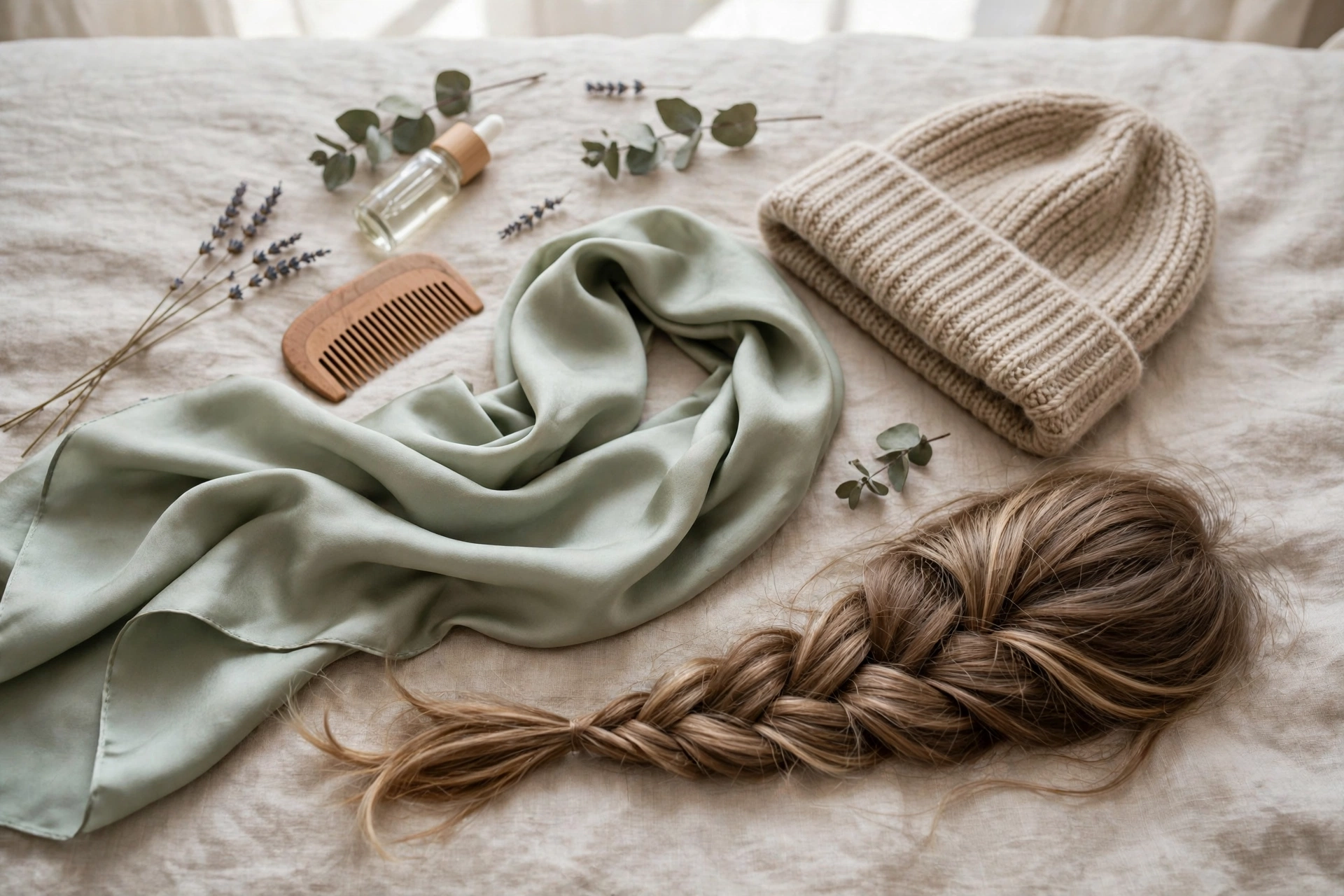
Winter in Lahore and Islamabad means wool: caps, scarves, shawls, and hair pulled tightly back so it does not fly around in the cold wind. All of that keeps you warm. But dermatologists and winter hair guides keep flagging the same side effect — friction from caps and scarves, and constant pulling from tight styles, quietly break hair through the season. A winter hair-fall guide updated ten days ago lists caps, scarves and woollen hats as a cause of breakage, and it is easy to see why once you know what to look for.
How a cap breaks hair
It is not the cap itself; it is the rubbing. Wool is rough, and every time you pull a cap on and off, or adjust a scarf, the fibres catch on the hair shaft. Over weeks, that friction roughens the cuticle — the hair’s outer layer — and roughened hair snaps more easily when you comb or brush it. The damage shows up first at the hairline and the ends: small broken pieces, frizz that no oil seems to fix, and hair that feels thinner at the front. Tight hairstyles add a second problem: pulling. A ponytail or bun pulled hard every day puts constant tension on the same follicles, especially at the temples and the nape. Done for months, that tension can thin the hairline — a pattern hair doctors call traction hair loss. It is preventable, and early on it is reversible, but only if you change the habit.
The fixes are small, not dramatic
Wear a softer layer underneath. A thin silk or satin scarf or cap liner between your hair and the wool removes most of the friction, and it costs almost nothing. If you wear a hijab, the same logic applies — a smooth undercap protects the hairline far better than a rough fabric sitting directly on it. Loosen the style. Switch a tight ponytail for a loose low braid or a loose bun, and vary the position day to day so the same follicles are not pulled every time. Use fabric-covered ties or scrunchies instead of thin elastic bands, which cut into the hair. And never tie wet hair tightly — wet hair stretches and snaps far more easily. Give your hair a rest day. One or two days a week with hair worn loose, or at least loosely tied, lets the scalp recover. On those days, a light oiling before washing helps replace the moisture winter air takes away — our winter frizz guide covers the moisture side of this routine in detail.
What about washing and oiling in winter?
This is where the routine ties together. Friction damage gets worse when hair is already dry, because dry hair is brittle. So the winter basics matter more, not less: oil 2–3 times a week, wash with lukewarm water and a mild shampoo, and do not rub hair dry with a rough towel — press it gently instead. Small habits, repeated daily, are what actually protect hair through December and January. If you want a simple pair for that routine, the Jabeen Premium Hair Oil (Rs 1,300) covers the oiling step and the Herbal Shampoo (Rs 1,300) covers the gentle wash; together they are the Hair Care Deal at Rs 1,999, with free delivery on the deal and cash on delivery, delivered in 3–5 working days across Pakistan. You do not need to give up your winter cap or your scarf — warmth matters. Just put a soft layer between wool and hair, loosen the tie, and let your hairline breathe. Your hair will notice the difference long before spring does.
